 |
|
       |
Our Mission |
||
Global Environmental Management - Without Risk Technologies Such As Green And Red Biotechnology,Biotech-Medicine with mRNA- and vector-Vaccines, CrisprCas9, Factory-Farming, Nuclear Power, Fracking, „Bioenergy with Carbon Capture & Storage“ (BECCS) |
||
|
 |

|
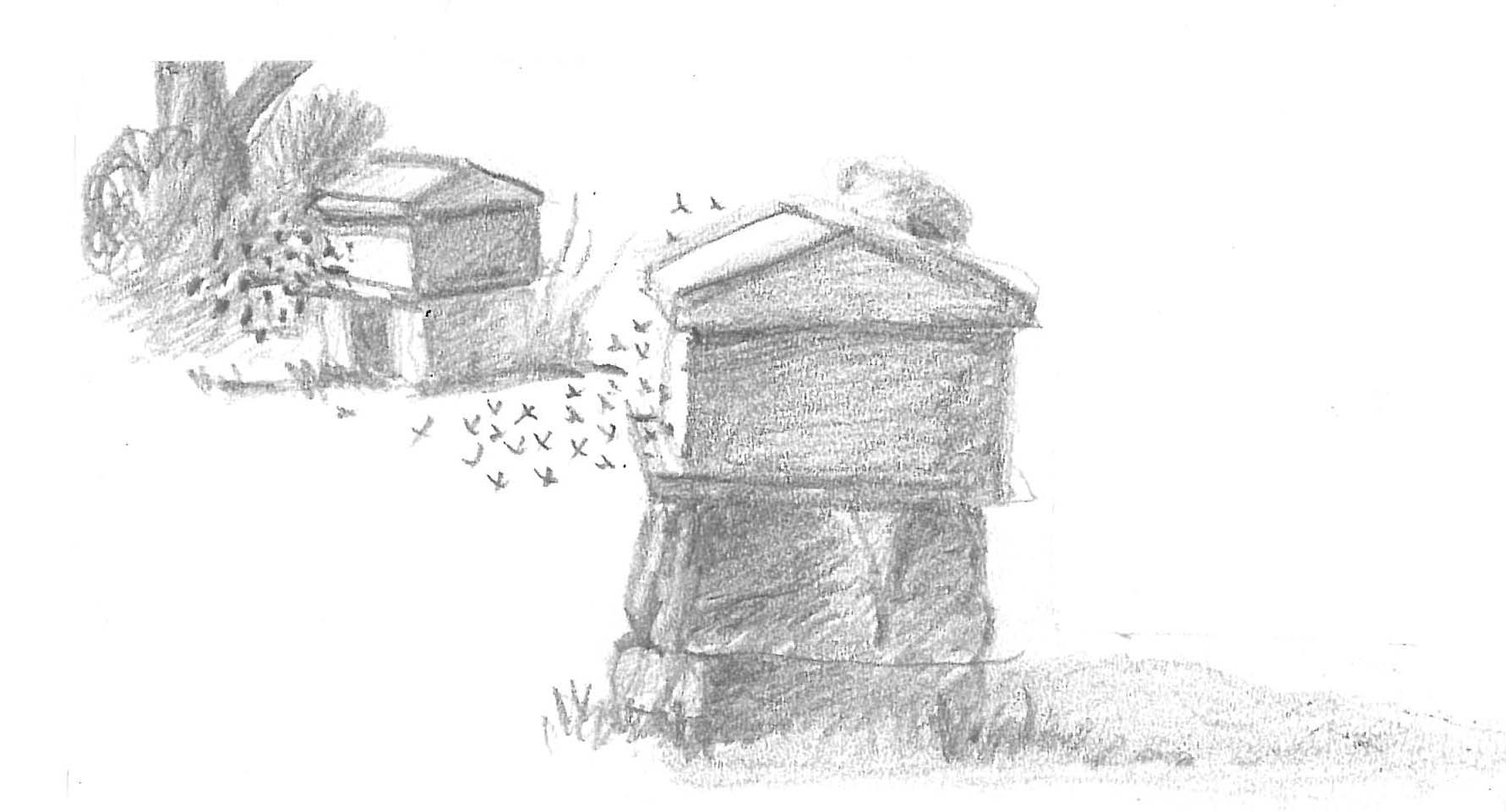
Organic / Ecological BeekeepingGet started keeping bees - simple and natural. Ecological beekeeping (wesensgemaesse Bienenhaltung) without frames and foundation; that means also without Bienenkiste. Further information can be found in our publications, online-magazine Apiculture, and it's supplement Apicultural Review Letters, press-releases and articles.The intention of
our certificate
courses I-III together with the Club
of Ecological Beekeepers is to establish a culture of organic / ecological
beekeeping again in the world.
|
|
|
Social Medicine, Alternative Therapy, Michael Thiele Bee Therapy / ApitherapyNatural medicine from nature and the bees - as it is described in our courses and publications. More...Further reading:
|
||
|
|||||||
|
|
Help Save The BeesBee colonies can serve also as a model or standard. Bees live in harmony with nature; if the human being is working with the bees he is invited to do so as well. Bees live also in harmony with nature in certified apiaries of Centre for Ecological Apiculture, the only Institution in Germany where bees kept in top bar hives and allowed to draw out their combs themselves, in contrast to bees from beekeepers who need to get along with plastic combs in plastic hives, artificial wax or foundation, wire and smoke.How can I help save the bees and other pollinators? Do something for the endangered pollinators by planting beefriendly bushes, trees and flowers in your garden, by building nisting sites for solitary bees,
|
|
|
Honey, Honey Comb, Beeswax, Propolis, Royal Jelly - Bees Know All About ItHoney, comb honey, beeswax, propolis, royal jelly as it is produced by the bees - in apiaries where they are kept according the character of bees (specialities such as comb-honey, run-honey, comb-honey with beebread / pollen and pure beeswax without residuals for kneading in kindergarten and for cosmetics or holistic therapies. Customers support by buying these products a "longlasting fertility in beekeeping" in contrast to success in artificial beekeeping for a short time.If you are looking
for a certified member apiary in your surrounding, please contact Centre
for Ecological Apiculture |
||
|
|||||||
|
|
Food with Living Forces - No Degerated ProductsThe production conditions need to fulfill the requirements for maintaining and supporting life forces instead of pushing them out by mineral fertilizers, pesticides or special processing techniques like ultrafiltration of honey (see also technical literature on honeyquality). |
|
|
Organic And Bio-Dynamical FarmingBiological - dynamical farming is a kind of soil cultivation and animal husbandry, which includes not only material processes. Target is an actually sustained farming with a manifold landscape. Another important target is the conservation of the primordial seeds, of genetical resources - which excludes the use of socalled "crops modified by biotechnology".Further reading:
|
||
|
|
|||||||
|
|
No Genetic Engineering and Crispr / Cas"Große Worte haben die Gentechnik von Anfang an begleitet. Der Sieg über den Krebs wurde in Aussicht gestellt, die Heilung sämtlicher Erbkrankheiten, die Lösung des Welternährungsproblems und noch vieles mehr. Nichts davon ist bis heute eingetroffen. Das Genom des Menschen wurde mit gewaltigem Aufwand entziffert. Wie es funktioniert, verstehen wir immer noch nicht." FAS 2014, Nr. 35, p. 47"Alle Ameisen zusammengenommen wiegen mehr als die gesamte Menschheit. Trotzdem droht der Erde kein Überbevölkerungsproblem." Michael Braungart Green and red Biotechnology in retreat, experts say there is a lack of safety culture among Biotech scientists and safety authorities. Why? The socalled dayfly-technology of agro genetic engineering is hardly able to get by one day without a scandal - also if some science journalists (ISAAA included) chant their horses. What other people call a scandal, among agro- biotechnologists it is everyday life: overspreading landscapes with genetically engineered Agrostis stolonifera or GE-rape manipulated by Monsanto, Bayer Crop Science. Because of high safety risk for consumers and environment Agro genetic engineering needs to be called a risk technology and is therefore to be flatly refused. Europe is not well known for it's risk technologies but for it's advanced technologies. Even ministries sometimes confuse the risk technologies with the advanced technologies (!) Because of negative side effects and the truisms that crops modified by biotechnology are neither able to cure poverty, hunger and dependency in developing countries, nor prevent from rise in prices for uncontaminated food, Agro-genetic engineering is a no-future-technology - despite deceptive statements of ISAAA. Required are new strategies in agriculture and beekeeping. Our expert teams work together with companies, governments of countries and federal states, who have banned the cultivation of crops modified by biotechnology (CrisprCas9 included); they'll receive support by our expert centres. Further reading:
|
|
|
Natural
Science, Arts and Philosophy
"Who is not able to grab the difference of the fantastical and imaginary, of what is according the rules of nature and what is hypothetical, is as a nature researcher in a bad situation. ... The thinking human being has the whimsical characteristic, that he to the place, where the not dissolved problem lies, gladly places a phantasy figure and fantastic stories when his imagination has gone wild, which he cannot get rid of, even if that problem is dissolved and the truth at the day. Who is accustomed to a wrong idea or misconception, will welcome each falsity." (Goethe) Goethe's organicism; reading in the book of nature, as practised by Goethe around 1800, is a paradigm for a holistic approach to biology and understanding the organic world. More info at Academy of Arts and Philosophy | Académie des Sciences | Colégio del Artes Further reading: Science Review Letters
|
||
|
|||||||
|
|
Environmental Science, Management And Further Environmental Issus Such As Nature Conservation And RecultivationThis includes support of threatened species by EU directives and programs as well as a developement of landscapes and habitats by ecological agriculture.Further reading:
|
|
|
|||
|
|||||||
|
|||||||